The Power of Pause: How Scott Tennant's Silence Speaks Louder Than Any Note He Plays
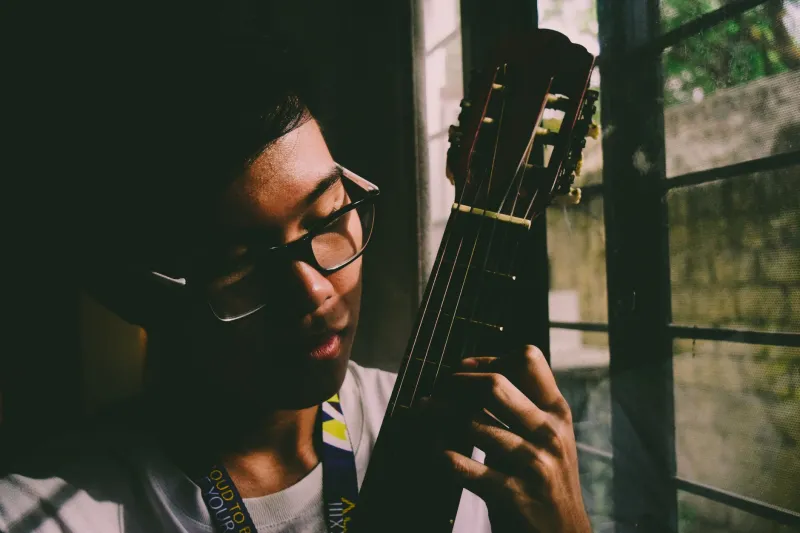
There's a moment in nearly every Scott Tennant performance where time seems to hold its breath. The music pulls back, a note fades into the air, and what fills the space isn't emptiness — it's intention. If you've ever sat with his recordings or watched him on stage, you know exactly what that feels like. It's one of those things that's hard to name in the moment but impossible to forget afterward.
In an era where guitar culture often rewards speed demons and technical acrobats, Tennant has built a reputation on something far more difficult to teach: knowing when to stop.
The Loudest Thing in the Room
Ask any seasoned musician about the hardest skill to develop and restraint will come up almost every time. It sounds counterintuitive, especially in classical guitar circles where the instrument demands so much physical precision and technical vocabulary. But the ability to leave space — to resist the urge to fill every measure with movement — is genuinely one of the rarest qualities a performer can cultivate.
Scott Tennant gets this on a cellular level. His approach to phrasing has always carried a kind of conversational quality, like someone who knows that the pause before an answer is sometimes more telling than the answer itself. He doesn't ornament for the sake of ornamenting. He doesn't rush through transitions just because he technically could. The silence between his notes isn't dead air — it's loaded.
This isn't accidental minimalism. It's a deeply considered philosophy about what music is actually for.
Stripping Back to Find the Core
One of the things that separates Tennant from a lot of players is his apparent comfort with simplicity. That's not a knock on complexity — he's more than capable of navigating intricate passages with jaw-dropping fluency. But there's a difference between complexity as a tool and complexity as a habit. Tennant leans toward the former.
When he approaches an arrangement, the question isn't just what can I add — it's what does this piece actually need? That distinction matters enormously. A lot of musicians, especially earlier in their careers, treat every performance as an opportunity to demonstrate the full range of what they can do. Tennant seems to have moved past that stage entirely. His focus is on the music, not the musician.
The result is an interpretive voice that feels unusually clean. Notes land with weight because they've been given room to breathe. Dynamics shift with real drama because the quieter moments have genuine quiet in them. When something big happens in a Tennant performance, it hits harder because he hasn't been building up to it with a wall of sound.
What Jazz Knew First
This idea of silence as a compositional element isn't new, of course. Jazz musicians have been talking about it for decades — Miles Davis built an entire second act of his career around it. Thelonious Monk was famous for the notes he didn't play. The concept even has a name in certain circles: negative space, borrowed straight from visual art.
But in classical guitar, the tradition can sometimes push performers toward a kind of completeness — a sense that every note on the page deserves equal attention and the job is to render the score as faithfully as possible. Tennant respects that tradition deeply, but he also understands that interpretation is where the performer's personality lives. And his personality, it turns out, is one that values stillness.
For American audiences who've grown up in a culture that tends to equate busyness with value — whether that's in music, work, or daily life — there's something almost radical about watching a performer choose restraint at every turn. It asks you to slow down too. It asks you to listen differently.
The Teaching Dimension
Tennant has spent a significant part of his career in education, and this philosophy of restraint runs through his teaching just as clearly as it runs through his playing. Students who've worked with him often talk about being encouraged to listen more and do less — to trust that the music will carry if they stop trying to carry it themselves.
That's a tough lesson for young players to absorb. When you've put in years of practice building technique, the instinct is to use it. Every run, every ornament, every dynamic swell feels earned. Letting go of that impulse takes a kind of confidence that only comes with experience — the confidence to believe that simplicity is a choice, not a limitation.
But it's a lesson that pays off enormously. Players who learn to use silence effectively tend to develop more expressive phrasing overall. They start thinking about music as a series of shapes rather than a series of notes. They become storytellers instead of technicians.
What Silence Actually Communicates
Here's the thing about a well-placed pause: it makes the listener lean in. There's a psychological effect to silence in the middle of music — the brain anticipates what's coming, fills in the gap with expectation, and when the next note arrives, it lands with extra resonance because of everything that preceded it.
Tennant seems to understand this intuitively. His silences aren't passive. They're active, directional, full of implied meaning. A rest in his hands isn't an absence of music — it's a different kind of music. It's the held breath before the exhale, the pause before the punchline, the space that gives the surrounding sound its shape.
This is why his recordings hold up over repeated listening in a way that more densely arranged performances sometimes don't. There's room inside the music. Room for the listener to exist inside it, to bring their own emotional response into the spaces Tennant deliberately leaves open.
A Lesson Worth Taking
For anyone picking up a guitar — or any instrument — the takeaway from Tennant's approach is both simple and genuinely hard to execute: trust the silence. Don't fill every gap just because you can. Don't prove your skill with volume or speed when a single, perfectly placed note will do more work.
The unplayed notes in a Scott Tennant performance aren't missing. They're chosen. And that choice, repeated across decades of playing and teaching, has quietly become one of the most distinctive signatures in contemporary classical guitar.
Sometimes the most powerful thing you can do is nothing at all. Tennant figured that out a long time ago — and his music has been speaking volumes ever since.