Never Coasting: The Daily Habits That Keep Scott Tennant's Playing Alive and Evolving
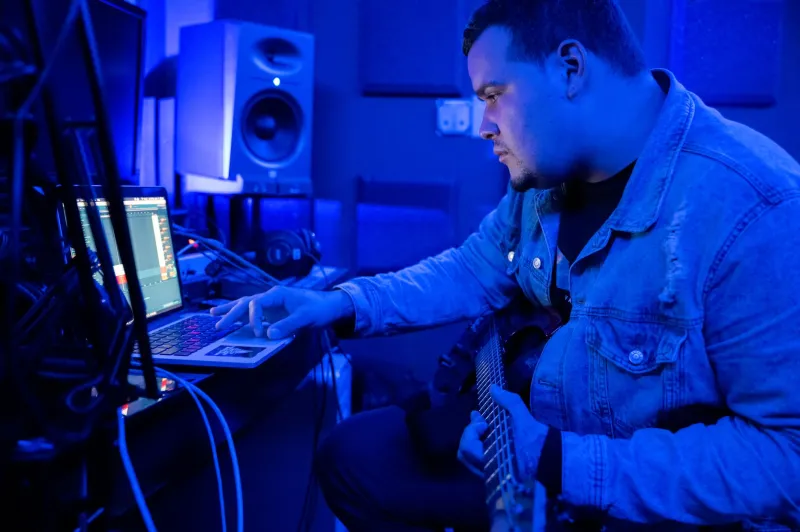
There's a trap that catches a lot of musicians who reach a certain level of mastery. You've put in the hours. You've developed a voice. People know what to expect from you, and what they expect is good. So you deliver it. Reliably, professionally, skillfully. And somewhere in that reliability, without anyone quite noticing, the spark starts to dim.
Scott Tennant has been playing at the highest level of classical guitar for long enough that coasting would be entirely understandable. It would also, by all accounts, be completely out of character. The through-line in how Tennant approaches his craft — from daily practice to long-term artistic development — is a kind of structured restlessness. An intentional refusal to let mastery become routine.
So how does that actually work in practice?
Starting With Curiosity, Not Obligation
The first thing that separates Tennant's approach to daily practice from the grind mentality is the framing. Practice, in the conventional sense, often gets treated as maintenance — you do it to keep your skills from degrading, the way you'd change the oil in your car. Tennant operates from a fundamentally different premise: practice is where you go to find something out.
This isn't just motivational language. It has concrete implications for how a practice session is structured. When you're maintaining, you run through what you already know. When you're investigating, you deliberately seek out the edges of what you don't. That might mean taking a passage you've played hundreds of times and approaching it from a completely different technical angle. It might mean working on a piece that makes you uncomfortable because it exposes a weakness. It might mean spending forty minutes on a single measure not because it's difficult, but because there's something in it you haven't fully understood yet.
The curiosity-first approach also means that Tennant's practice sessions aren't always predictable. There's a structure, but it's responsive. If something interesting surfaces in the first twenty minutes, he follows it. That kind of attention to what the music is actually offering — rather than what the practice plan says should happen — is one of the less-discussed but most important creative habits in his toolkit.
The Role of Deliberate Discomfort
One of the patterns that emerges when you look at how Tennant has evolved as a player over the decades is a consistent willingness to put himself in situations where he isn't comfortable. This isn't masochism. It's a specific strategy for preventing the kind of calcification that happens when you only work within your established strengths.
For Tennant, deliberate discomfort might look like taking on repertoire that doesn't fit neatly into his established style. It might mean exploring technical approaches that conflict with his existing habits — working through them not necessarily to adopt them permanently, but to understand what they reveal about his own default choices. It might mean sitting with a piece that frustrates him for longer than feels productive, because the frustration itself is information.
This is a concept that resonates strongly in American athletic and performance culture — the idea that growth happens at the edge of your current capability, not in the comfortable middle. Tennant applies that principle with the same rigor you'd expect from a serious competitive athlete, but directed entirely toward musical and artistic development.
Mental Frameworks That Prevent Autopilot
Beyond specific technical habits, Tennant's approach to creative freshness relies on a set of mental frameworks that actively work against autopilot. One of the most consistent is the practice of re-examining assumptions.
Every musician develops interpretive habits — ways of phrasing certain types of passages, dynamic tendencies, rhythmic approaches that become automatic over time. These habits aren't inherently bad. They're part of what gives a player their voice. But left unexamined, they can become a cage. Tennant periodically goes back to pieces he knows deeply and asks a simple but destabilizing question: why am I doing it this way?
Sometimes the answer is fully satisfying — the choice is the right one, and revisiting it only strengthens his conviction. But sometimes the answer reveals that a habit has been running on autopilot, disconnected from genuine musical intention. Those discoveries are valuable. They're also only available to someone who's willing to question their own expertise.
Another framework Tennant uses is what might be described as deliberate listening — consuming music outside his primary genre with specific attention to what it's doing technically and expressively. Not casual background listening, but active engagement with how other musical traditions solve problems. Jazz phrasing. Flamenco rhythmic structure. The way certain American folk traditions handle ornamentation. These aren't things Tennant necessarily incorporates directly into his playing. But they expand the vocabulary of possibilities available to him when he's making interpretive decisions.
Staying Teachable at Every Level
Perhaps the most striking aspect of Tennant's ongoing development is his relationship to learning itself. There's a tendency in any field — and classical music is not immune — for established masters to stop positioning themselves as students. The hierarchy hardens. You become the teacher, and being taught feels like a threat to your authority.
Tennant doesn't operate that way. His engagement with students, with younger players, with musicians from different traditions has consistently been characterized by genuine receptivity rather than performance of openness. He asks questions. He takes suggestions seriously. He's willing to be shown something by someone who's been playing for a fraction of the time he has, because the source of an idea doesn't determine its value.
This posture — staying genuinely teachable — might be the single most important habit in his creative practice. It keeps the channels open. It ensures that his development isn't limited to what he can generate internally. And it models something genuinely important for every musician watching: the goal isn't to arrive at a place where you no longer need to grow. The goal is to stay curious enough that growth never stops being possible.
In a musical landscape that changes faster than it ever has — new technologies, new platforms, new ways audiences engage with music — that kind of adaptive curiosity isn't just an artistic virtue. It's a survival skill. And Scott Tennant has been practicing it, deliberately and consistently, for his entire career.