Where the Music Came From: The Teachers and Traditions That Made Scott Tennant Who He Is
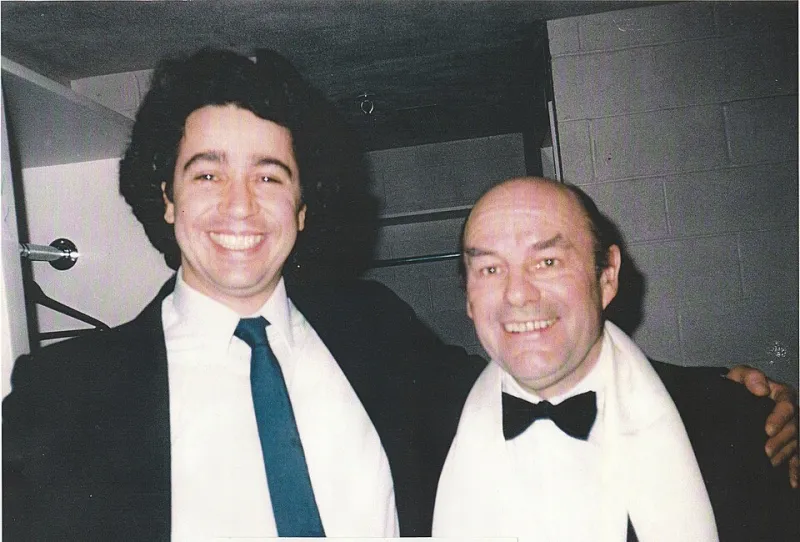
Photo: Michael Laucke, CC0, via Wikimedia Commons
There's a line that runs through all great art. Not a straight line — more like a river that splits and rejoins and picks up new tributaries as it moves. Scott Tennant sits at a particular bend in that river, downstream from some remarkable musicians and upstream from generations of players who've been shaped by his example. Understanding where he came from doesn't diminish what he's built. It makes it richer.
The Foundation: Serious Early Training
Scott Tennant came of age as a guitarist during a period when classical guitar in America was experiencing a genuine renaissance. The instrument was gaining institutional credibility, finding its way into university music programs, and producing a generation of players who were as technically rigorous as any pianist or violinist.
Tennant was part of that generation, and his early training reflected its ambitions. He studied with teachers who took the instrument seriously as a vehicle for the full classical tradition — not just Spanish repertoire or parlor pieces, but the complete sweep of Western art music adapted for the guitar. That breadth became foundational to everything he'd do later.
The discipline instilled in those early years shows up in his playing in ways that are easy to hear but hard to articulate. There's a structural clarity to how he approaches even the most expressive passages — a sense that he always knows where he is in the architecture of a piece, even when he's allowing himself maximum interpretive freedom within it.
The USC Years and the Pepe Romero Connection
Perhaps the most significant chapter in Tennant's musical education came through his studies at the University of Southern California and his deep connection to the Romero guitar dynasty — one of the most influential families in the history of the instrument. Pepe Romero, in particular, represents a tradition of Spanish guitar playing that goes back generations, carrying within it a directness of expression and a commitment to singing tone that has left clear marks on Tennant's own approach.
Studying within that tradition means absorbing not just technique but philosophy. The Romero approach to the guitar is rooted in the idea that the instrument should sing — that it should speak with the directness and warmth of the human voice rather than retreating into abstraction or technical display. You can hear that philosophy in the way Tennant shapes a melodic line, always pulling the music toward something communicative and immediate rather than something impressive and remote.
The USC environment also surrounded him with peers who would go on to become major figures in the guitar world. That kind of creative community — people who challenge each other, share ideas, and hold each other to high standards — is its own form of education, one that no single teacher can provide.
What Gets Passed Down Beyond Technique
When we talk about musical mentorship, we tend to focus on the technical stuff: how to hold the instrument, how to practice efficiently, how to build repertoire. But the most important things that get passed from teacher to student are often harder to name.
In Tennant's case, what seems to have been transmitted along with the technique is a particular attitude toward the work itself — a seriousness about preparation that coexists with genuine spontaneity in performance, a respect for the composers whose music he plays that never tips over into reverence-induced stiffness, and an understanding that the ultimate goal of all the practice and preparation is communication. Not perfection. Communication.
Those values don't appear in method books. They get transmitted through years of close observation, through the feedback loop of lessons, through watching how a great teacher approaches their own playing and their own relationship to the repertoire. Tennant absorbed those lessons and made them his own.
The Broader Musical Lineage
Beyond his direct teachers, Tennant's artistic identity has been shaped by a broader lineage of guitar giants whose recordings and legacy permeate the classical guitar world. Andrés Segovia's foundational work in establishing the guitar's legitimacy as a concert instrument, Julian Bream's extraordinary range and interpretive daring, John Williams's technical precision and clarity of thought — these are the presences that any serious classical guitarist works in relationship to, consciously or not.
What's interesting about how Tennant has engaged with that lineage is the selectivity of the influence. He hasn't tried to be any of those players. He's absorbed what was useful and built something that is recognizably his own. That's actually the hardest thing to do when you're surrounded by towering models — to learn from them without being swallowed by them.
Teaching as a Way of Honoring the Lineage
One of the clearest signs that an artist has genuinely internalized their mentors' lessons is the quality of their own teaching. Tennant's work as an educator — including his widely used instructional book Pumping Nylon — represents a deliberate act of transmission. He's taking what was given to him and passing it forward with care and clarity.
That book in particular has introduced hundreds of thousands of players to a systematic approach to classical guitar technique. It's become a standard text in university programs across the country, which means Tennant's influence extends far beyond the students he's taught directly. He's become part of the lineage himself — a node in that river that future players will trace back when they're trying to understand where their own musical values came from.
Why Lineage Strengthens Rather Than Limits
There's a version of the artist-as-genius story that erases all the teachers and influences and presents the creative individual as a self-made original. It's a compelling story, but it's almost never true, and it's not particularly useful as a model for younger artists trying to figure out their own path.
The more honest and more generative story is the one Scott Tennant's career actually tells: that knowing where you came from gives you a foundation to stand on, a set of values to either embrace or push against, and a sense of responsibility to the people who will come after you. Artistic lineage isn't a constraint. It's a resource.
And in Tennant's case, it's one he's drawn from with remarkable depth and gratitude.