When the Rulebook Meets the Moment: Scott Tennant's Approach to Controlled Chaos
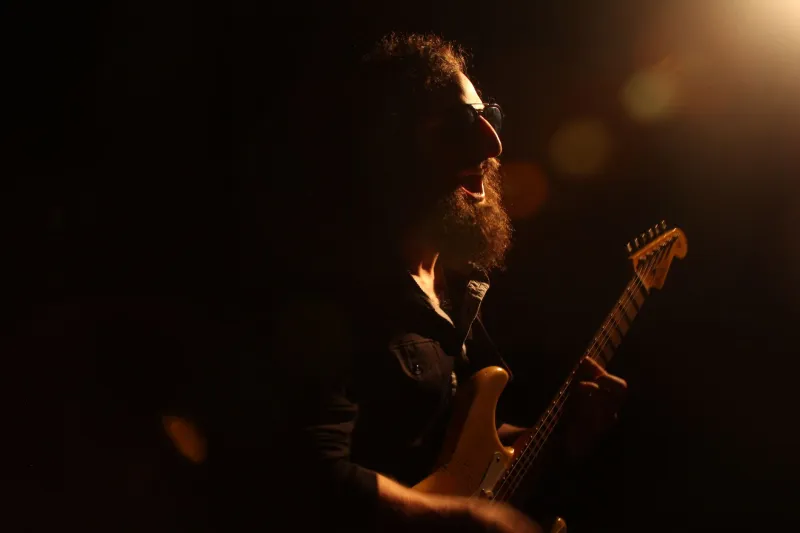
There's a conversation that comes up constantly in creative circles — the debate between structure and freedom. Do you follow the process, trust the technique, and let the craft carry you? Or do you throw out the blueprint and chase whatever the moment is handing you? Most artists quietly pick a side. Scott Tennant has spent his career refusing to.
What makes his work genuinely compelling — to longtime fans and newcomers alike — isn't just technical polish or raw expressive energy on its own. It's the collision of both. It's the sense that something deeply rehearsed is also, somehow, happening right now for the very first time.
The Foundation You Can't Skip
Before you can understand how Tennant breaks the rules, you have to understand how seriously he takes learning them in the first place. Discipline isn't a constraint for him — it's a launching pad.
In various conversations about his process, Tennant has been consistent about one thing: the preparation phase is non-negotiable. Whether he's approaching a new performance, a recording, or a creative project, the groundwork gets laid methodically. Scales. Structure. Repetition. The kind of behind-the-scenes work that audiences never see but always feel.
This mirrors what you see in the best American athletes and musicians — think of a jazz pianist who's drilled theory for twenty years before sitting down to improvise, or a quarterback who's studied so much film that his instincts in the pocket feel almost automatic. The preparation doesn't kill the spontaneity. It makes real spontaneity possible.
For Tennant, that foundation means he's never improvising from scratch. He's improvising from a place of deep knowledge, which is an entirely different thing.
Reading the Room — and the Moment
Here's where things get interesting. Tennant has talked about the specific moment in performance or creative work where preparation has to step aside. It's not a scheduled handoff. It's more like a feeling — a signal from the work itself that something organic wants to happen, and the worst thing you could do is override it with technique.
That awareness — knowing when to follow the score and when to deviate from it — is one of the hardest things to teach and one of the most valuable things an artist can develop. It requires a kind of dual consciousness: staying technically grounded while also staying emotionally present enough to catch the moment when the unexpected option is actually the right one.
In practice, this shows up in how Tennant approaches performance energy. There are moments in his work where you can almost feel the decision happening in real time — a choice that lands with more weight precisely because it doesn't feel calculated. Those moments aren't accidents. They're the result of enough preparation that he can afford to let go.
The Creative Process Behind Closed Doors
For anyone curious about what this actually looks like on a day-to-day basis, the picture is less glamorous than the results might suggest. Tennant's creative process involves a lot of iteration — trying things, scrapping them, trying again. The spontaneous-feeling choices that end up in the final work are often surrounded by hours of more deliberate experimentation that never makes the cut.
This is where the discipline and the spontaneity aren't really opposites at all. The disciplined work creates the conditions where genuine creative accidents can happen. You put in the time, you build the vocabulary, and then — when you're deep enough in the process — something unexpected emerges that you couldn't have planned for. The trick is being prepared enough to recognize it and confident enough to keep it.
There's also a physical dimension to this for Tennant. Performance isn't just a mental exercise — it's embodied. The muscle memory built through disciplined practice means that certain technical elements can run in the background, freeing up cognitive and emotional bandwidth for the more spontaneous, interpretive choices happening in the foreground.
What Artistic Maturity Actually Looks Like
It's worth stepping back and asking why this balance matters, especially right now. In today's creative landscape — where content moves fast, attention spans are short, and there's enormous pressure to be both consistent and surprising — the artists who figure out this tension are the ones with staying power.
Artistic maturity isn't about choosing discipline over spontaneity or vice versa. It's about developing the judgment to know which one the work needs at any given moment. That judgment doesn't come from talent alone. It comes from experience, from failure, from enough repetitions that the choice starts to feel natural.
Tennant's career reflects that arc. Early on, you can see the technical ambition — the desire to master the form. As the work evolves, what emerges is something more fluid, more willing to take risks, more comfortable with uncertainty. That's not a rejection of the earlier discipline. It's the discipline paying off in a different way.
Why Fans Connect With It
From a fan perspective, this duality is a big part of what makes Tennant's work so rewatchable, so relistenable. There's always something to catch that you might have missed — a moment where the structure bends slightly, where something unexpected slips through. It rewards attention.
And there's something reassuring about it, too. In a world that often demands you be one thing — either the technically precise professional or the free-spirited creative — Tennant's work is a reminder that the most interesting artists don't accept that binary. They build the skills and then they trust themselves enough to play.
That's the philosophy, and honestly, it translates well beyond music or performance. It's a pretty solid blueprint for creative work in any field: put in the time, learn the rules deeply enough that breaking them becomes a real option, and stay present enough to know when the moment is asking for something the rulebook can't give you.
Scott Tennant has been living that approach for years. The work shows it.